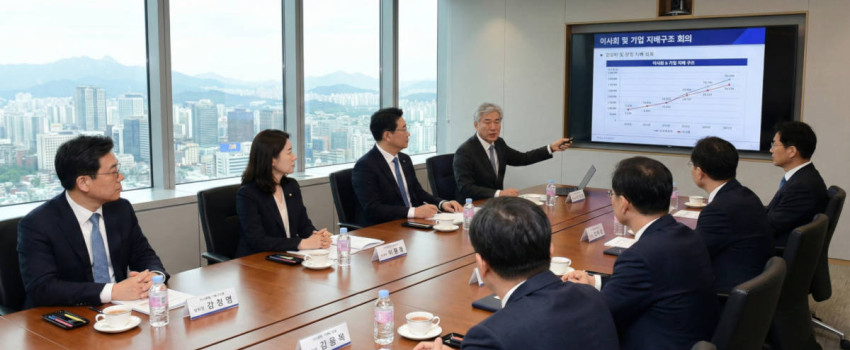
Corporate governance in Korea is not limited to year-end procedures. Directors and management must comply with ongoing duties throughout the year, including board supervision, reporting, conflict of interest management and protection of shareholders’ rights. Many foreign-owned companies benefit from continuous advisory support to navigate these requirements in practice.
Legal basis under the Korean Commercial Act
- The board must supervise directors and receive regular reports on their performance of duties.
Article 393 (Authority of Board of Directors) (2) The board of directors shall supervise the performance of duties by the directors. (4) Directors shall report on the progress of their duties to the board of directors more than once every three months.
- Directors owe duties of loyalty and confidentiality to the company.
Article 382-3 (Duty of Loyalty) provides that directors shall perform their duties in good faith in the interest of the company in accordance with Acts, subordinate statutes and the Articles of Incorporation. Article 382-4 (Duty of Confidentiality) provides that directors shall not divulge business secrets of the company learned in the course of performing their duties.
- Directors must manage conflicts of interest and self-dealing in accordance with law.
Article 397 (Prohibition of Competition) generally prohibits directors from engaging in competitive transactions without approval of the board of directors, and Article 398 (Transactions between Directors, etc. and Company) regulates transactions between directors (and related persons) and the company, requiring board approval and setting conditions to protect the company.
- Shareholders have rights to information and to challenge improper acts.
Article 396 (Obligation to Retain and Disclose Articles of Incorporation, etc.) grants shareholders and creditors rights to inspect or copy key corporate documents such as articles of incorporation, minutes and shareholder registers. Articles 402–405 provide mechanisms for shareholders to seek injunctions against unlawful acts by directors and to bring derivative suits on behalf of the company.
What does ongoing governance and compliance involve in practice?
Beyond AGMs and board approvals of financial statements, ongoing governance in Korea typically covers:
- Scheduling and documenting regular board meetings and receiving quarterly reports from management as envisaged by Article 393.
- Reviewing and documenting related-party transactions and potential conflicts of interest under Articles 397 and 398.
- Monitoring director terms, independence and eligibility, including external roles and shareholdings.
- Ensuring timely filings and public notices for changes in directors, auditors, capital and other registered matters.
- Responding to shareholder information requests and preparing for potential inspections or disputes.
Common issues for foreign-owned companies
- Relying on informal headquarters-driven processes without aligning them with Korean board and shareholder rights requirements.
- Under-documenting conflict of interest approvals or related-party transactions, creating risk in future audits or disputes.
- Inconsistent understanding among local management and foreign directors about their legal duties under Korean law.
- Reacting to governance issues only when an audit or regulator raises questions, instead of building a proactive framework.
How KOISRA UP can help
KOISRA UP provides ongoing governance and compliance advisory tailored to foreign-owned entities in Korea. We help design practical board and reporting frameworks that satisfy Korean legal requirements while remaining workable for busy management teams. Our service includes drafting and reviewing governance policies, preparing bilingual board and shareholder documentation, and working closely with Korean lawyers and judicial scriveners on complex matters such as conflict-of-interest approvals, derivative suits risk and regulatory inquiries.
This article is part of KOISRA UP’s Corporate Secretarial & Governance Services series. To learn more about our ongoing governance and compliance advisory support in Korea, please visit our Corporate Secretarial & Governance Services in Korea page.
This Insight is for general information only and does not constitute legal, tax or accounting advice. The application of Korean law depends on the specific facts of each case. Before taking any action, you should obtain advice from a qualified Korean lawyer, CPA or other professional adviser who understands your circumstances.
